

6 Hidden Costs of Running a Cell Phone Repair Business

6 Hidden Costs of Running a Cell Phone Repair Business

What are the 6 Hidden Costs of Running a Cell Phone Repair Business? Starting a cell phone repair business can seem like a lucrative venture. The demand is constant, the parts readily available, and the profit margins on a screen replacement can look appealing. However, many aspiring entrepreneurs, and even some established repair shops, often underestimate the true financial complexities of running such an operation.
The quoted price for a repair is just the tip of the iceberg. Today, let’s unveil the 6 hidden costs that significantly impact the profitability and sustainability of a cell phone repair business.
Understanding these often-overlooked expenditures is crucial for accurate pricing, effective budgeting, and long-term success.
1. The True Cost of Parts
At first glance, the wholesale price of a replacement screen or battery seems straightforward. However, the actual cost of providing a quality part to your customer is far more nuanced.
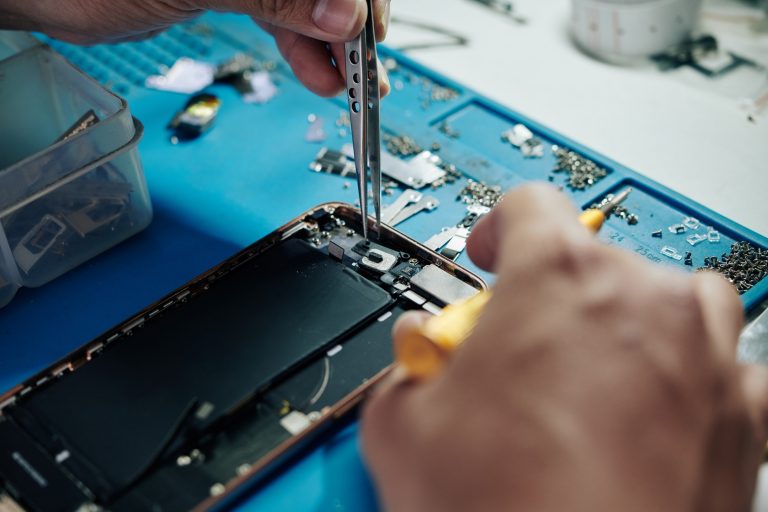
Quality Control & Returns
Not all “wholesale” parts are created equal. You’ll inevitably encounter defective components, even from reputable suppliers. This means setting aside budget for replacement parts, covering return shipping costs, and, critically, the non-billable labor time spent re-doing a repair due to a faulty component. This can quickly erode your profit on a single job.
Inventory Management & Obsolescence
Maintaining a diverse inventory of screens, batteries, charging ports, and small components for various phone models ties up significant capital. There are costs associated with storage space, tracking systems, and the time spent on inventory audits.
Furthermore, the rapid pace of smartphone releases means older parts can quickly become obsolete, leading to potential inventory write-offs and wasted investment.
Sourcing & Logistics
Finding reliable suppliers, especially for newer or less common models, involves significant research and negotiation. Shipping costs, customs duties, and import taxes (particularly for international sourcing) can drastically increase the final cost of a part. These logistical expenses are often absorbed into your cost of goods sold.
Bulk Purchase Minimums
To get better per-unit pricing, you might be forced to buy in bulk, leading to a larger upfront investment and potentially holding more inventory than immediately necessary.
2. Labor & Expertise
The cost of a technician’s time is more than just their hourly wage. It encompasses a spectrum of investments essential for quality service.

Competitive Wages & Benefits
To attract and retain skilled technicians capable of handling delicate and complex repairs, you need to offer competitive salaries. Beyond direct wages, factor in payroll taxes, potential health insurance, retirement contributions, and other employee benefits.
Continuous Training & Certification
The mobile technology landscape evolves rapidly. Technicians require ongoing training on new phone models, repair techniques, and diagnostic tools. These courses, certifications, and workshops represent a significant financial commitment and are crucial for staying competitive and reducing repair errors.

Specialized Tooling & Equipment
High-quality repair demands specialized tools beyond basic screwdrivers. Think microscopic cameras, precision soldering stations, cleanroom environments, and sophisticated diagnostic software. These tools are expensive to acquire, require regular maintenance, and have a limited lifespan, necessitating a budget for replacement and upgrades.
Non-Billable Technical Time
Technicians spend considerable time on tasks that aren’t directly billable, such as diagnosing complex issues that ultimately don’t lead to a repair, cleaning their workstations, organizing parts, and handling customer inquiries or troubleshooting minor post-repair issues. This “unproductive” time still contributes to your overall labor cost.
3. Operational Overheads
A repair business isn’t just about the bench; it’s a functioning entity with numerous fixed and variable costs that impact your overall pricing strategy.

Rent & Utilities
The physical storefront comes with rent, electricity, water, internet, and potentially specialized HVAC systems to maintain a dust-free and temperature-controlled environment. These are significant fixed costs that must be covered regardless of repair volume.
Insurance & Licensing
Protecting your business from unforeseen events is paramount. This includes general liability insurance (in case of accidental damage to customer devices or accidents on your premises), property insurance for your equipment and inventory, and potentially specialized insurance for handling electronics. Business licenses, permits, and compliance fees also add up.
Marketing & Advertising

To attract and retain customers, you need to invest in marketing. This includes online advertising (Google Ads, social media), local promotions, professional signage, website development and maintenance, and potentially even traditional advertising like flyers or local radio spots.
Administrative & Software Costs
From accounting software and Point of Sale (POS) systems to CRM (Customer Relationship Management) tools, payment processing fees, office supplies, and professional services like bookkeeping or legal advice – these administrative costs are essential for efficient operation.
Security
Protecting your valuable inventory, expensive tools, and customer devices from theft or damage requires investment in security systems, surveillance cameras, and potentially alarm monitoring services.
4. Transportation

Whether you operate a physical storefront or offer mobile repair, the movement of goods and people incurs real costs.
Parts Procurement
Even if you order parts online, there’s often the cost of picking them up from a local distributor or a designated delivery point. This involves vehicle wear and tear, fuel costs, and valuable employee time spent on transit.
Employee Commute (Indirect)
While part of a technician’s wages, the overall business model inherently accounts for the cost of employees commuting to your shop.
Mobile Repair Service Specifics
For businesses offering on-site or pick-up/delivery services, transportation becomes a direct and substantial hidden cost:
Fuel & Vehicle Maintenance
Significant expenses for service vehicles, including fuel, regular servicing, tire replacement, and eventual vehicle depreciation.
Non-Billable Travel Time
The hours technicians spend driving between appointments are time they aren’t performing billable repairs. This “dead time” is a significant factor to calculate into your service pricing.
Tolls & Parking Fees
These can quickly accumulate, especially in urban areas.
Commercial Vehicle Insurance
Often more expensive than standard auto insurance.
5. Warranty & Post-Repair Support
A reputable repair business doesn’t just fix a phone; it offers peace of mind. This commitment to customer satisfaction comes with a direct cost.
Replacement Parts & Labor for Warranty Claims
If a new part fails prematurely or an issue arises directly related to your repair within the warranty period, you are obligated to fix it at no additional cost to the customer. This means absorbing the cost of a new part and the technician’s labor for the re-repair.
You must build a buffer into your pricing to cover a certain percentage of these inevitable claims.
Customer Service Time for Warranty Issues
Handling warranty claims involves significant customer communication, diagnostics, scheduling, and problem-solving, all of which consume valuable staff time that is not directly generating new revenue.
Reputation Management
While a cost, a strong warranty policy is also an investment in your business’s reputation. It builds customer trust, leads to positive word-of-mouth referrals, and fosters repeat business, ultimately contributing to long-term profitability. However, the direct expenses associated with honoring warranties must be accounted for.
6. Risk & Liability
Despite meticulous processes, the inherent risks associated with handling delicate electronics can lead to unexpected financial drains.
Accidental Damage During Repair
Even the most skilled technician can make a mistake. A slipped tool, a static discharge, or a snapped ribbon cable can damage a component, requiring you to replace it at your own expense. This immediate loss needs to be factored into your pricing.
Pre-Existing Conditions & Undisclosed Damage
Many devices come in with hidden issues (e.g., prior water damage, micro-fractures on the motherboard) that may only become apparent or exacerbate during the repair process. If these issues lead to further complications and the device is unfixable or requires more parts, you often bear the brunt of the cost, especially if not explicitly outlined in disclaimers.
Data Loss Liability
While responsible shops advise customers to back up data, there’s always a theoretical risk of data loss during complex repairs. Reputable businesses take precautions, but the potential liability, however small, can be a significant concern.
Time Spent on Unfixable or Complex Diagnostics
Some devices present highly complex issues that require extensive diagnostic time but ultimately prove unfixable or cost-prohibitive to repair. This diagnostic time is still a cost to your business, even if no revenue is generated from that specific device.
How CellBotics Can Help?
Understanding these hidden costs is the first step, but effectively managing them requires expertise. This is where comprehensive training, like the Cell Phone Repair Course offered by CellBotics, becomes invaluable.

CellBotics doesn’t just teach you how to fix phones; they equip you with the knowledge and practical skills to run a profitable repair business by directly addressing many of these hidden costs.
Our Cell Phone Repair Course is designed to mitigate many of these hidden business costs by teaching you to identify reliable part suppliers and perform quality checks, thereby minimizing costly returns and defective components.
The curriculum boosts labor efficiency through repair techniques and diagnostics, reducing non-billable time and improving repair success rates. While primarily focused on repair, the course also addresses operational realities, helping you understand how to factor overheads into your pricing and, for mobile repair models, how to optimize transportation through efficient routing.
Ultimately, this comprehensive training aims to reduce warranty claims and liabilities by promoting high-quality repairs, while also equipping you with the diagnostic skills to minimize risks from unforeseen issues like pre-existing conditions or accidental damage during repair.
By investing in quality training, you’re not just learning a skill; you’re investing in the longevity and profitability of your cell phone repair business, transforming potential hidden costs into manageable variables.
Conclusion
Running a successful cell phone repair business requires a clear-eyed understanding of all expenses, not just the obvious ones. By meticulously accounting for these six hidden costs—the true cost of parts, labor and expertise, operational overheads, transportation, warranty and post-repair support, and risk and liability—entrepreneurs can develop sustainable pricing strategies, manage cash flow effectively, and build a robust, profitable business that withstands the competitive landscape.
Ignoring these invisible price tags is a fast track to financial struggle; embracing them is the path to long-term success.
Thank you for reading my blog,
Nicole Russell